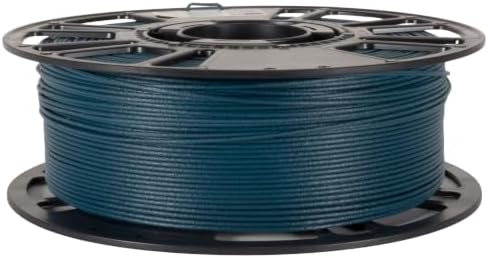
3D-Fuel Pro PCTG-GF10 Filament 1.75mm 1kg, Toolbox Gunmetal Blue | 10% Glass Fiber for Stiffer Parts, Matte Finish, Vacuum Sealed, Made in USA
Compare every 3D-Fuel PCTG-GF listing →
Is this a good price? Every Thursday we email the cheapest price per kg for each major material, plus our best buy of the week.
Product Details
- STIFFER PRO PCTG WITH 10% GLASS FIBER: Pro PCTG reinforced with glass fiber for parts that need to hold their shape. Compared with unfilled Pro PCTG it is stiffer and more dimensionally stable, with less warping and sag on large flat parts, and it keeps the same chemical and UV resistance.
- BUILT FOR PARTS THAT MUST STAY STIFF: Brackets, mounts, jigs, fixtures, tool holders, enclosure panels, garage and shop parts, outdoor parts and functional prototypes. The matte finish hides layer lines straight off the printer. Need flex or snap-fits? Unfilled Pro PCTG is the tougher choice.
- PRINT SETTINGS: Glass fiber is abrasive, so use a hardened steel nozzle, 0.4 mm or larger. Print at 260°C with a 65-70°C bed on textured PEI (80°C can stick too well). Keep max flow around 6-8 mm³/s on a 0.4 mm nozzle and use less part cooling than unfilled Pro PCTG. No enclosure needed.
- 1KG SPOOL, SEALED DRY: Vacuum sealed with desiccant, with diameter held to +/- 0.02 mm for smooth, consistent feeding. Dry at 70°C for 6-8 hours before the first print. Start from your Pro PCTG profile and calibrate pressure advance for GF10 instead of reusing the Pro PCTG or PETG value.
- MADE IN FARGO, NORTH DAKOTA, USA: Extruded in our own factory. 3D-Fuel publishes print guides, slicer profiles and data sheets for every material, and real people answer support questions.
From the listing on Amazon.
View our other 3D-Fuel listings here.
View our other PCTG-GF listings here.
Keep your filament dry, view our gear here.
Printing 3D-Fuel PCTG-GF
3D-Fuel PCTG-GF in Matte Blue is PCTG filled with chopped glass fiber, and this listing is a 1kg spool. The fibers make parts stiffer and more dimensionally stable than plain PCTG, but they are abrasive, so a hardened nozzle is mandatory (see nozzle compatibility below). Few makers publish separate PCTG-GF settings, so the ranges below are for plain PCTG; expect to print toward the top of them. Brands and even individual spools vary, so treat these as starting points and run a quick temperature tower to lock in the sweet spot for your printer.
Ranges checked against Fiberlogy, 3D-Fuel and Essentium data. Heat resistance is the heat deflection temperature (HDT). Read our PCTG filament guide for bed adhesion, drying, troubleshooting, and material-specific tips.
Nozzle Compatibility
Glass fiber is abrasive and wears brass (and stainless) nozzles out of round, sometimes within a single spool. Use hardened steel or another wear resistant nozzle such as ruby or tungsten carbide. With hardened steel, start about 5 to 10°C hotter than you would with brass.
Based on Bambu Lab and Prusa guidance. More in our glass fiber filament guide and nozzle types guide.