PA6 vs PA12 Nylon: Stiffer and Hotter or Drier and Easier
Pick PA6 when a part needs the higher stiffness and heat resistance of the two: gears, brackets and wear parts. Pick PA12 when the part lives in humid conditions, needs to hold its size, or has to flex without cracking: clips, snap fits and housings. PA12 absorbs far less water and is easier to print, while PA6 is stiffer when dry.
PA6 vs PA12 Prices Right Now
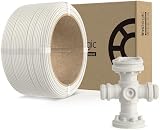
PA12

PA6 and PA12 Side by Side
| Property | PA6 | PA12 |
|---|---|---|
| Moisture absorption | High; soaks up water quickly | Much lower, roughly a third of PA6 or less |
| Dimensional stability | Swells and changes size as it absorbs water | Holds its size well in humid conditions |
| Stiffness | Stiffer when dry; softens as it absorbs water | More flexible |
| Toughness | Very tough, and tougher once it absorbs moisture | Tough and flexible, keeps impact strength in the cold |
| Heat resistance | Generally higher; fiber filled grades go highest | Lower when unfilled; fiber filled grades much higher |
| Ease of printing | Harder; warps and needs thorough drying | Easier; less warping and more forgiving storage |
| Typical uses | Gears, brackets, tooling, wear parts | Clips, snap fits, housings, oil and fuel contact parts |
When to Choose PA6
PA6 is the stiffer, stronger of the two when dry, and it generally holds up to heat under load better than PA12, especially in carbon or glass fiber filled grades. That makes it a good fit for gears, brackets, fixtures, tooling and wear parts.
Its weak point is water. PA6 absorbs a lot of moisture from the air, which makes it tougher and more flexible but also softer and slightly larger over time. Plan for that in parts with tight fits.
When to Choose PA12
PA12 has a longer molecular chain and absorbs far less water, so its size and properties change much less in humid conditions. It is more flexible than PA6, keeps its impact strength well in the cold, and resists oils, fuels and greases, which suits clips, snap fits, housings and parts near engines or machinery.
Unfilled PA12 usually softens under load at a lower temperature than unfilled PA6, though figures vary by grade. If a PA12 part needs heat resistance, a carbon or glass fiber filled grade closes most of that gap.
Printing Differences
Both need to be dried before printing and stored sealed, but PA6 is far more demanding: it picks up enough water within hours to bubble, string and print weak parts. PA6 also warps more, so an enclosure and a well prepared bed are close to essential. PA12 prints with less warping and tolerates storage better.
Heat resistance varies widely between grades, so check the heat deflection temperature at 0.45 MPa on the data sheet of the spool you buy rather than relying on the base polymer name. Fiber filled versions of either need a hardened nozzle.
Cost Differences
Both are engineering filaments that cost more per kilogram than PETG, and prices vary a lot between plain and fiber filled grades. Compare like with like when shopping. The live prices on this page show where the two stand right now.
Cheapest PA6 and PA12 Spools


PA6 vs PA12 FAQ
Which nylon absorbs less moisture, PA6 or PA12?
PA12. It absorbs far less water than PA6, so it holds its size and stiffness better in humid conditions and is easier to keep dry.
Is PA6 stronger than PA12?
PA6 is stiffer and stronger when dry. PA12 is more flexible and changes less with humidity. For rigid gears and brackets, PA6 is the usual choice; for clips and snap fits, PA12.
Which nylon is more heat resistant?
Unfilled PA6 generally handles heat under load better than unfilled PA12. Carbon and glass fiber filled grades of both go much higher, so check the heat deflection temperature on the specific spool's data sheet.
Is PA12 easier to print than PA6?
Yes. PA12 warps less and is less sensitive to moisture. PA6 needs thorough drying and usually an enclosure.