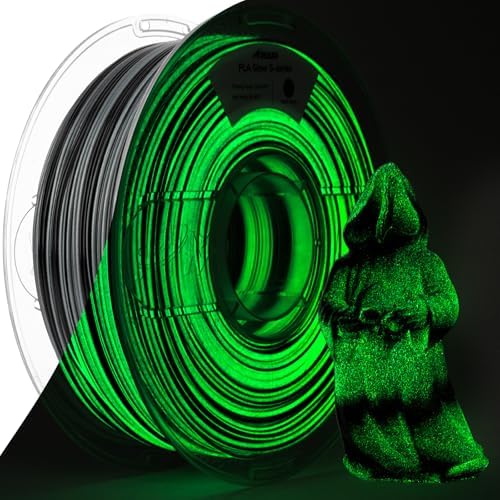
AMOLEN Glow PLA 3D Printer Filament 1.75mm Shiny Black Green 1KG ±0.02mm
Compare all 14 AMOLEN PLA Glow 1kg listings →
Is this a good price? Every Thursday we email the cheapest price per kg for each major material, plus our best buy of the week.
Product Details
- 【Glow-in-the-Dark Effect】 Light up your 3D creations with a glow-in-the-dark effect that stands out in low light. Great for gifts, displays, and projects that need to shine day and night
- 【Brighter Glow with UV Charging】 For best glow results, expose your prints to UV light for about 30 minutes. This helps boost brightness and extend glowing time, keeping your creations visible longer in the dark
- 【Multicolor Effect in One Spool】 No need to switch filaments. This glow filament shifts colors as you print, creating a multicolor rainbow effect across your project
- 【Smooth Printing, Less Hassle】 Strong bed adhesion and a precise 1.75mm diameter (±0.02mm) support stable feeding and smooth printing, helping reduce warping and clogs
- 【Made by Makers, for Makers】 AMOLEN focuses on multicolor filaments, with a commitment to quality, innovation, and responsive customer support
From the listing on Amazon.
View our other AMOLEN listings here.
View our other PLA listings here.
Keep your filament dry, view our gear here.
Printing AMOLEN PLA
AMOLEN PLA in Glow Green runs on the PLA profile below, and this listing is a 1kg spool. PLA is best suited to everyday prototypes, models, and indoor parts that won't face heat or heavy stress. Brands and even individual spools vary, so treat these as starting points and run a quick temperature tower to lock in the sweet spot for your printer.
Ranges checked against Bambu Lab, Prusament and Polymaker data. Heat resistance is the heat deflection temperature (HDT). Read our PLA filament guide for bed adhesion, drying, troubleshooting, and material-specific tips.
Nozzle Compatibility
This listing includes glow-in-the-dark filament. The phosphorescent pigment that makes it glow is hard and wears brass nozzles quickly, even though the filament looks like ordinary plastic. Use hardened steel or another wear resistant nozzle, starting about 5 to 10°C hotter than with brass.
Based on Bambu Lab, Polymaker and eSUN guidance. More in our nozzle types guide.