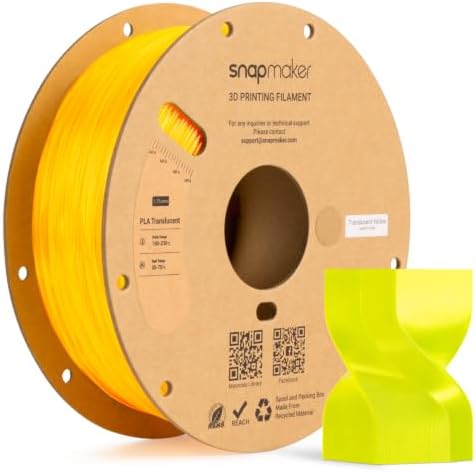
Snapmaker PLA Translucent Filament 1.75mm, 3D Printer Filament 1kg(2.2lbs)
Compare all 15 Snapmaker PLA Glow 1kg listings →
Is this a good price? Every Thursday we email the cheapest price per kg for each major material, plus our best buy of the week.
Product Details
- 【Frosted-Glass Translucency】PLA Translucent Filament gently diffuses transmitted light for a refined, atmospheric finish. Suitable for lighting accents, decorative prints, and display pieces.
- 【Adjustable Light Transmission】Control translucency by adjusting the wall loop count. Thinner walls transmit more light, while thicker walls produce a softer, more muted glow.
- 【Beginner-Friendly Printing】PLA Translucent Filament is more forgiving to print than translucent PETG, with reduced stringing and lower moisture sensitivity. Printed parts release easily from the build plate and feature clean, refined surfaces.
- 【Broad Printer Compatibility】Supports most FDM 3D printers while allowing for manual parameter tuning. Features optimized profiles built into Snapmaker Orca for the Snapmaker U1.
- 【RFID Recognition】When used with Snapmaker U1, exclusive RFID integration automatically loads preset filament information. Built-in Snapmaker Orca profiles further reduce manual setup.
From the listing on Amazon.
View our other Snapmaker listings here.
View our other PLA listings here.
Keep your filament dry, view our gear here.
Printing Snapmaker PLA
Snapmaker PLA in Glow runs on the PLA profile below, and this listing is a 1kg spool. PLA is best suited to everyday prototypes, models, and indoor parts that won't face heat or heavy stress. Brands and even individual spools vary, so treat these as starting points and run a quick temperature tower to lock in the sweet spot for your printer.
Ranges checked against Bambu Lab, Prusament and Polymaker data. Heat resistance is the heat deflection temperature (HDT). Read our PLA filament guide for bed adhesion, drying, troubleshooting, and material-specific tips.
Nozzle Compatibility
This is an unfilled plastic, so it is not abrasive: a brass nozzle works and lasts, and so does hardened steel. With hardened steel, print about 5 to 10°C hotter.
Based on Bambu Lab and Prusa guidance. More in our nozzle types guide.