Best Filament for Beginners
Start with PLA. It prints at low temperatures on any printer, needs no enclosure, barely warps and forgives imperfect settings, and it is the cheapest common filament per kilogram. PLA Plus and PLA Pro are slightly tougher versions for a small premium. Move up to PETG once your first prints are coming out clean and you need parts that handle heat or knocks.
What Matters in a First Filament
Ease comes first. A beginner filament should stick to the bed without fuss, not warp at the corners, and print well on the default profile in your slicer, so that when a print fails you can learn from it instead of fighting the material.
Price and availability matter next. You will use a lot of plastic while learning, so a filament that is cheap per kilogram and sold in every color by many brands lets you practice without worrying about waste.
Our Picks
1. PLA
The standard first filament. Low print temperatures, almost no warping, no enclosure, sharp detail and among the lowest price per kg of any common material. Every printer ships with a PLA profile.
Compare PLA prices →2. PLA Plus (PLA+)
PLA with additives that make it a little tougher and less brittle. It prints a little hotter than standard PLA, at about 200 to 230°C, with the same heat limits, so it is an easy upgrade once you want parts that survive a drop.
Compare PLA Plus prices →3. PLA Pro
Another tougher PLA, usually aimed at better impact strength and layer bonding. Like PLA Plus, it prints a little hotter than standard PLA, at about 200 to 230°C, with the same heat limits. Brands use Plus and Pro loosely, so compare specific spools rather than the label.
Compare PLA Pro prices →4. PETG
The natural second filament. Tougher and more heat resistant than PLA and still printable without an enclosure, but it strings more and needs a bit of tuning, so try it after a few spools of PLA.
Compare PETG prices →Cheapest Beginner Filament Right Now
PLA, 1kg (market avg $19.71/kg)

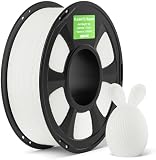

PLA Plus, 1kg (market avg $18.35/kg)


PLA Pro, 1kg (market avg $17.50/kg)


PETG, 1kg (market avg $17.08/kg)


.
Tips for Your First Spools
- Start with a plain color like white, grey or black from an established brand. Silk, matte and multicolor spools print well too, but plain colors make it easier to spot and fix problems.
- Use your slicer's default profile for the material and change one setting at a time.
- Clean the build plate with isopropyl alcohol before printing. Finger oils are the most common cause of prints not sticking.
- Get the first layer right before anything else. A slightly squished, even first layer fixes most adhesion problems.
- Keep spools in a sealed bag or box with desiccant when not in use. Even PLA prints worse after absorbing moisture.
- Skip TPU, nylon, ABS and carbon fiber filaments at first. They need extra hardware or tuning that is easier once you know your printer.
Frequently Asked Questions
What filament should a beginner use?
PLA. It is the easiest filament to print, works on every consumer printer with no enclosure, and is the cheapest common material per kilogram.
Is PLA+ or PLA Pro better than PLA for beginners?
PLA Plus and PLA Pro are slightly tougher and less brittle and print almost the same way, just a little hotter at about 200 to 230°C, so either is a good choice if the price difference is small. Plain PLA is just as easy and usually a little cheaper.
Should a beginner start with PETG?
It can work, but PETG strings more and is fussier about settings and moisture. Most people get better results starting with PLA, then moving to PETG for tougher parts.
How much filament does a beginner need?
One or two 1kg spools is plenty to learn on. A 1kg spool usually covers dozens of small prints, and you can buy more once you know which colors and materials you use.